Italy Packing Checklist for Spring: 25 Items You'll Actually Use
Spring in Italy doesn't arrive all at once. It arrives in patches: a warm Tuesday in Rome when the piazzas fill by noon, then a cold, wet Thursday in Bologna that sends everyone back to the hotel for a coat. Pack for Sicily in April and you'll be fine. Pack for Sicily, Florence and three days in the Dolomites in the same suitcase and you have an actual puzzle on your hands.
The good news is that spring packing is less about volume than about the right few pieces. Bring layers you can shed by lunchtime, shoes that survive cobblestones, and a small bag of things you'll reach for every single day. Here is what genuinely gets used.
The Three-Layer Rule
Build every day around three thin layers instead of one thick one. A cotton or merino T-shirt against the skin, a light sweater or zip fleece over it, and a water-resistant jacket with a hood on top. That combination handles 8°C at breakfast, 20°C at lunch and a breezy 13°C after dinner without a single change of clothes.
Thin beats thick here. A bulky wool coat is dead weight by 11 a.m. and takes up half your bag. Two light sweaters you can rotate will serve you far better, and they dry overnight if you rinse them in the sink.
Dress for churches, not just weather
Many Italian churches — and the Vatican in particular — expect shoulders and knees covered, and this is enforced at the door during high season. It's easy to forget when it's 22°C outside. A large scarf or pashmina solves it in seconds: drape it over bare shoulders, or wrap it around your waist over shorts. It also doubles as a pillow on a night train and a picnic blanket in a park. Pack one, always.
One outfit that isn't hiking gear
Spring evenings in Italy can be surprisingly dressy, and a dinner in a trattoria feels different when you're not in trail trousers. One pair of dark trousers or a simple dress, plus a pair of shoes that aren't your walking shoes, covers every dinner, aperitivo and wedding-adjacent event you might stumble into.
Rain Gear That Earns Its Place
April and May are wet months across much of the north and centre, and spring rain in Italy tends to be short and heavy rather than drizzly. Two things handle it: a compact umbrella and a jacket with an actual hood.
- A small, sturdy umbrella. The €5 ones sold on street corners after a downpour turn inside out in the first gust off a canal. Bring a compact one that folds small but has a real frame.
- A water-resistant jacket, not necessarily waterproof. Unless you're hiking in the Alps, a light jacket that shrugs off twenty minutes of rain is enough and packs far smaller.
- A dry pouch for phone, passport and paper tickets. A simple ziplock bag works. Wet paper train tickets are a small, specific kind of misery.
Skip the full rain suit. You will not wear it, and you'll resent carrying it by day four.
Shoes Decide the Trip
This is where most packing mistakes happen. Italian cities are paved with sanpietrini — those small, uneven cobblestones that are beautiful in photographs and punishing in new shoes. Add Venice's bridges, the stairs of a hill town like Orvieto or Assisi, and museum floors, and you have a lot of hours on your feet.
Bring two pairs maximum. One pair of walking shoes, already broken in, with a grippy sole and room for your toes to spread. One slightly smarter pair for evenings. Wear the bulkier pair on the plane so it isn't in your bag.
A few practical notes. Smooth leather soles are a bad idea on wet stone. Blister plasters are worth more than any gadget you'll pack. And wool-blend socks, rather than cotton, keep your feet comfortable through a long day of walking — three or four pairs will do if you rinse them.
Documents and the Paper Backup
Italy is a country where a reservation on your phone is usually fine — until it isn't. Keep a paper backup of anything that would ruin a day if you couldn't open it: train tickets, museum bookings, hotel confirmations, insurance details.
Book the big sights ahead. The Vatican Museums, the Uffizi, the Last Supper in Milan and the Borghese Gallery all work best with a timed reservation, and spring is busy. Check the official sites rather than resellers, and print or screenshot the confirmations.
Carry your passport, or an ID card if you're travelling within the EU. Italian law requires you to have identification on you, and hotels will need to register it anyway. Store a photocopy separately from the original, and keep a photo of the details somewhere you can reach offline.
If you plan to drive, check the rules for your driving licence and any permit you might need before you leave — requirements vary by country, so confirm with your national motoring authority. Same for medication: keep prescriptions in their original packaging and ask your doctor or pharmacist about documentation if you're carrying anything regular.
Small Things You'll Use Every Day
The items that make a trip comfortable are rarely the expensive ones.
- A universal adapter. Italy uses type C, F and L plugs at 230V. A single small adapter with a couple of USB ports replaces a bag of chargers.
- A power bank. Long days of maps, photos and train apps drain a phone fast.
- A refillable water bottle. Rome's public fountains run cold, clean water all over the centre, and every Italian city has somewhere to fill up.
- A coin purse. Small purchases, café counters and market stalls still run on €1 and €2 coins.
- Tissues and hand sanitiser. Many public toilets are basic, and some are unstaffed.
- Travel-size detergent. A sink wash mid-trip is the difference between a carry-on and a checked bag.
- Sunglasses and sunscreen. Spring sun in the south is stronger than the temperature suggests.
The 25-Item Spring Checklist
- Two or three light base layers, including one long-sleeve
- One thin merino or cotton sweater
- One zip fleece or cardigan
- Water-resistant jacket with a hood
- Compact umbrella
- One large scarf or pashmina
- Dark trousers or jeans
- One smarter outfit for evenings
- Broken-in walking shoes with grip
- One second pair of shoes
- Three or four pairs of wool-blend socks
- Underwear and sleepwear for five days
- Passport or ID, plus two photocopies
- Printed train, museum and hotel confirmations
- Travel insurance or health card details
- Small card and coin holder
- Universal adapter
- Power bank and charging cable
- Offline maps and a translation app downloaded
- Refillable water bottle
- Sunglasses and sunscreen
- Blister plasters and a small first-aid kit
- Tissues and hand sanitiser
- Foldable tote for shopping and day trips
- Zippered pouch for valuables
Packing It in One Bag
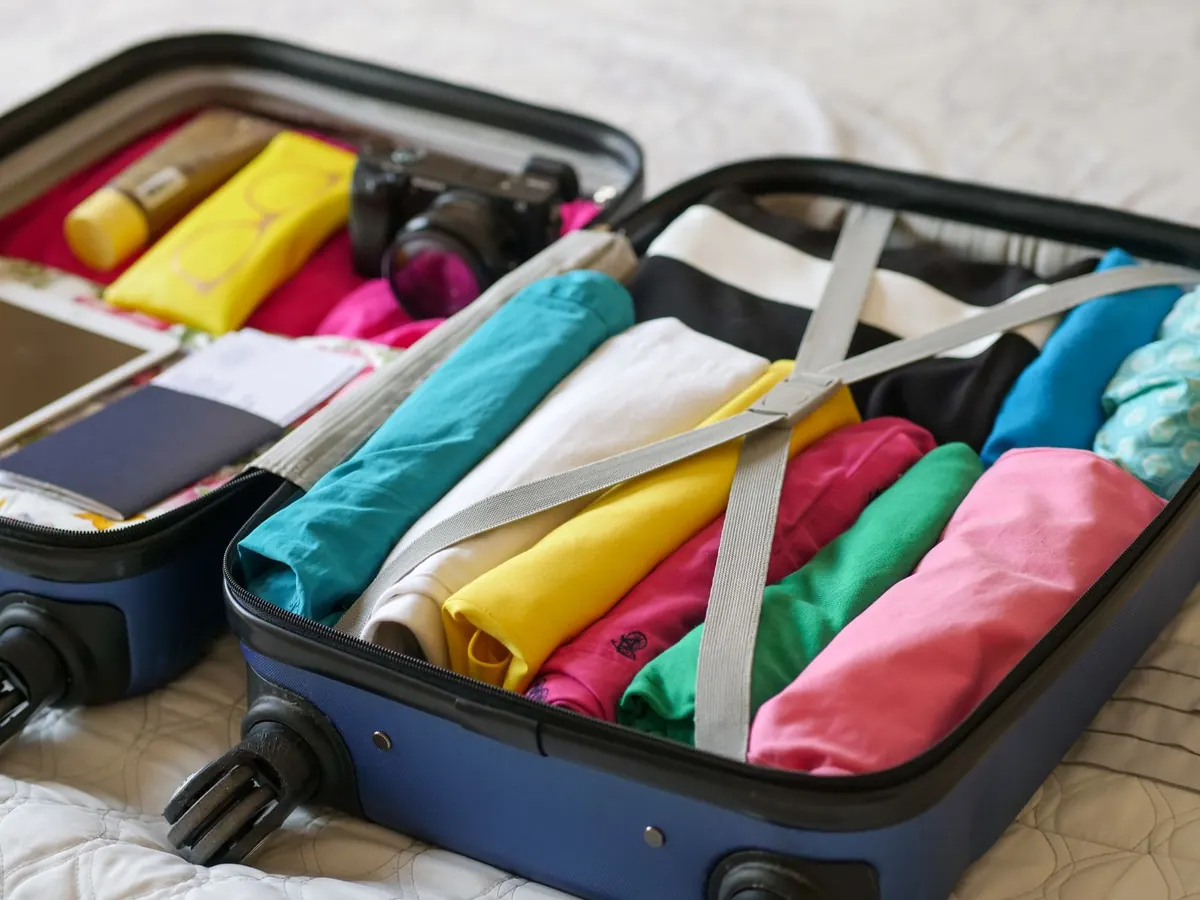
Roll your clothes rather than folding them; they wrinkle less and fit into gaps. Wear your bulkiest shoes and jacket on travel days, and leave a corner of the bag empty on purpose — you'll want room for a jar of something, a pair of leather gloves from a market stall or a bag of coffee from a roaster you walked past.
Check your airline's cabin allowance before you go, since some European carriers weigh bags at the gate, and a four-kilo limit difference can cost you at the worst possible moment. Finally, remember that spring in Italy rewards flexibility more than preparation: the day you planned for rain will be sunny, and the one you packed for in a T-shirt will end in a cold wind off the river. Layers fix both.
Photo: Kindel Media / Pexels